

ABOUT
THE PRIZE

PURPOSE
The program of the German Jazz Prize is preceded by a preamble outlining the vision and goals of the award.
Read the full preamble
Jazz is a network of musical practices whose beginnings can be traced back to the 20th century in the United States.
In jazz musicians’ own understanding, the emergence of a musical personality is closely connected to developing an individual musical language – which functions as an expression of social, musical and biographical background.
As contemporary improvisational music drawing from African-American as well as various other global classical and ethnic musical traditions, jazz has long become an independent, original and vibrant part of German music culture.
As an Afro-diasporic art form, jazz is formative for the current musical discourse, particularly addressing and artistically reflecting the issues of our time. With its multifaceted identity, jazz develops and acknowledges historical, geographical and cultural crosslinks/crossover. This is one of the reasons why jazz is readily associated by the public with the idea of freedom; in the history of this music, freedom was and still is a value/good often endangered and defended against resistance. Indeed, the concept of freedom is central to jazz’s potential to transcend categories of age, gender, social origin, and ethnicity.
In particular, improvisation as a cultural technique constitutes a special competence (skillset) in a world with ever more complex interrelations. The authentic characteristics of jazz – internationality, transculturality and creolity – are becoming increasingly important.
Hence, the systematic and permanent support of jazz as an expression of artistic attitude and as a cultural practice is a challenge for contemporary cultural policy, as performance and reception have undergone an unprecedented development in recent years. This development fundamentally influences and shapes the richness of contemporary music culture, impacting other art forms such as film, theater, literature or the visual arts.
Furthermore, the variety of styles and potential constellations for musical projects meanwhile attracts a highly diverse crowd of global musicians to Germany to be part of the new developments of jazz in this country. As music whose essence lies in experiencing both live performances and audio recordings, jazz is increasingly challenged to meet the fundamental transformation of the music market with sustained innovation.
The German Jazz Prize pursues the overarching goal of creating, living and promoting more cultural diversity in musical practice, education, cultural management, as well as in recording and documentation. All members of the jazz community should gain increased mobility, form networks and develop new concepts and formats for the performance, recording and dissemination of jazz and improvised music.
The purpose of the German Jazz Prize is to reward innovators of jazz in all its facets, as well as to introduce jazz in new ways to a diverse audience.
The prize is intended as an orientation for those interested in jazz from all social groups both domestic and abroad, and is based on the self-conception that jazz and improvised music belong to the cultural educational canon. The German Jazz Prize reflects the music’s social significance, and its award criteria are first and foremost based on artistic considerations.
• promote the diversity of jazz in and from Germany
• honor and strengthen exceptional artistic creativity, innovation and achievements in national and international jazz,
• help jazz from Germany achieve even greater worldwide appeal
• lead to a stronger anchoring of jazz in society
• embody and strengthen cultural diversity
• visibly support jazz creators and their networks. To this end, in addition to increased public attention through the German Jazz Prize, its various categories should be appropriately financially endowed.
In order to honour this innovative strength in all its facets, former Minister of State for Culture Prof. Monika Grütters (Federal Government Commissioner for Culture and the Media 2013-2021) has launched the German Jazz Prize. As the Federal Government’s central funding institution for the music industry, the Initiative Musik has been entrusted with its realisation.
German Jazz Prize team ↗︎
The first edition of the German Jazz Prize took place on June 3rd 2021 with the goal of establishing itself as an annually recurring flagship event.
CATEGORIES
The German Jazz Prize shines the spotlight on the diversity and creativity of the German jazz scene and honours exceptional, artistic and innovative achievements in a national and international context with prizes in 22 categories.
There are categories curated by juries ↗︎ as well as submission ↗︎ categories for which applications are open.
The prize winners receive a trophy and prize money of at least €10,000. Nominees who do not win a prize receive at least €1,000 in nomination money.

ADVISORY
BOARD
The concept of the German Jazz Prize is constantly being developed together with an advisory board, which is composed of distinguished representatives of the jazz scene, appointed by the Initiative Musik and the incumbent Federal Government Commissioner for Culture and the Media. Furthermore, the panel has the right to submit proposals concerning the appointment of jury members ↗︎.
Current advisory board members

Cultural Journalist | Music Critic

Director of Jazzinstitut Darmstadt | Cultural Manager | Researcher

Senior Communication Manager Classical & Jazz at Sony Music

Saxophonist | Composer
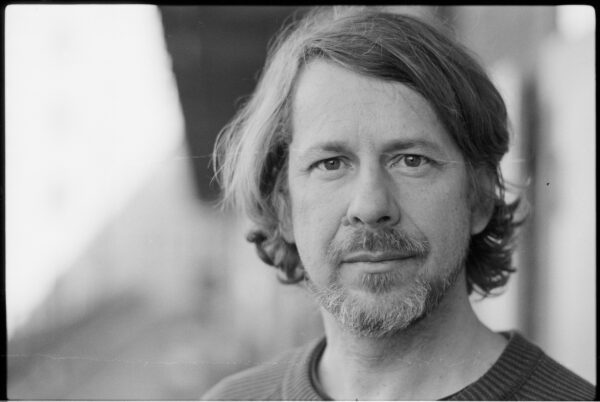
Guitarist | Composer | Professor for Jazz Guitar at Lucerne University of Applied Sciences and Arts/Lucerne School of Music
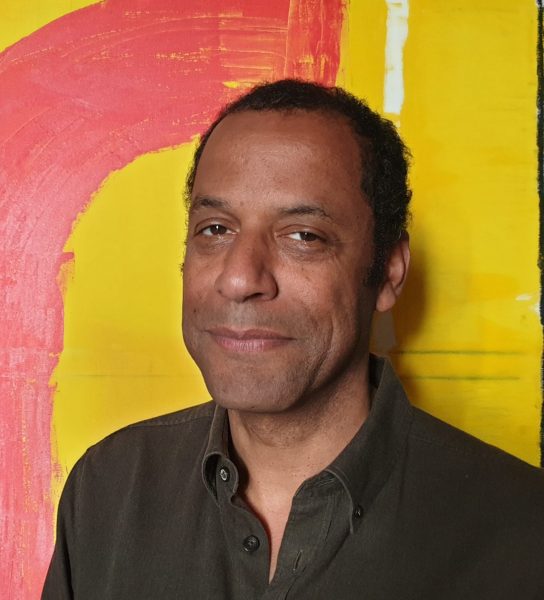
Musicologist | Author | Saxophonist | Lecturer atOsnabrück University of Applied Sciences

Musician | Curator | Board Member of German Jazz Union (Deutsche Jazzunion)
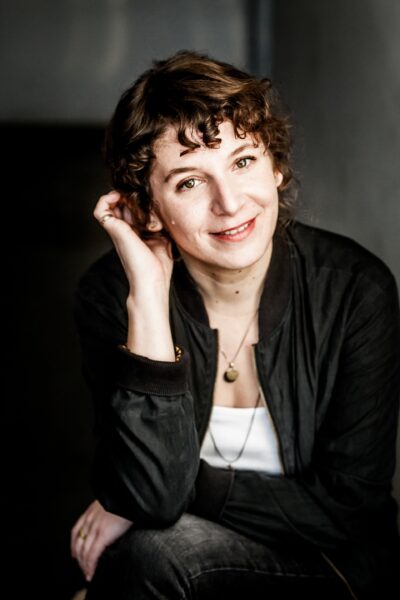
Programmer Kulturzentrum Schlachthof e.V., Bremen
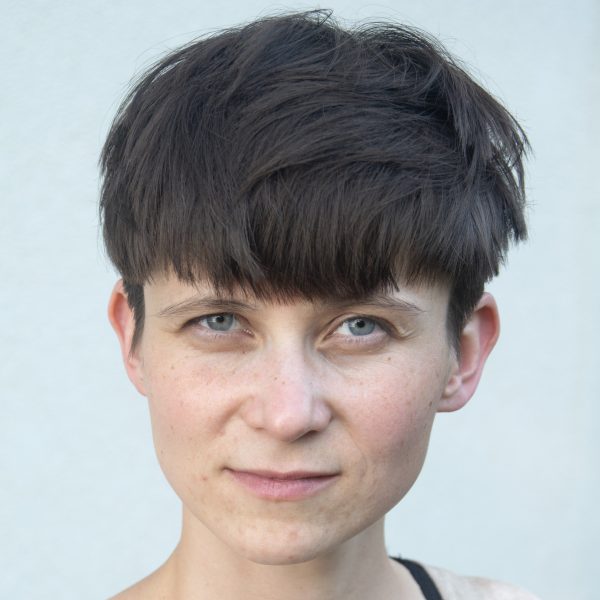
Program Director Leipziger Jazztage | Member of Advisory Board for Music at City of Leipzig Cultural Office

Board Member of VUT – Verband unabhängiger Musikunternehmer*innen e. V. (Association of Independent Musicians and Music Companies in Germany)

Musician | Vocal Coach | Curator | PENG Festival Co-initiator | Board Member of German Jazz Union (Deutsche Jazzunion)

Managing Director of Jazzclub Tonne, Dresden
¹ appointed by the Bundeskonferenz Jazz (Federal Jazz Conference), representing the areas of festivals/event organizers, media, and academia
² representative for the major-label sector
³ appointed by the Deutscher Komponist:innenverband (German Composers’ Association)
⁴ appointed by the Deutsche Jazzunion (German Jazz Union)
⁵ appointed by VUT – Verband unabhängiger Musikunternehmer*innen e. V. (Association of Independent Musicians and Music Companies in Germany)
⁶ appointed by the Federal Government Commissioner for Culture and the Media (BKM) and Initiative Musik
PROGRAM
The program description provides comprehensive information on the German Jazz Prize. Answers to frequently asked questions are available further down in the FAQ section.
FAQ
For which categories can one apply?
The award categories of the German Jazz Prize are divided into submission categories and curated categories. The following are so-called submission categories, for which musicians and other professionals in jazz, who meet the formal requirements and selection criteria, can apply:
8. Large Ensemble of the Year
10. Large Ensemble of the Year International
11. Album of the Year
12. Debut Album of the Year
13. Broadcast Production of the Year
14. Album of the Year International
15. Debut Album of the Year International
16. Festival of the Year
19. Composition/Arrangement of the Year
20. Journalistic Achievement
22. Music Mediation
Applications can be submitted by artists, producers, managers, promoters, employees of labels, publishers, and broadcasting companies, as well as by authors of journalistic contributions, festival organizers, and organizers of music mediation projects. The submission deadline is November 30, 2025, 23:59 (CET).
In the remaining curated categories, nominations for potential award recipients are made solely by the expert and main jury. Further information on the submission categories and their application requirements can be found in the program description.
Applications can be submitted in the following categories for achievements by persons who are German citizens, have been resident in Germany for at least three years or have completed their studies at a German university or other accredited educational institution. Regarding festivals, broadcast productions and projects in the field of music mediation, only the location of production is relevant – it must be in Germany.
8. Large Ensemble of the Year
11. Album of the Year
12. Debut Album of the Year
13. Broadcast Production of the Year
16. Festival of the Year
19. Composition/Arrangement of the Year
20. Journalistic Achievement
22. Music Mediation
In the case of group projects, at least half of the participating artists/performers or the bandleader, who is the eponym of the ensemble, must meet the above-mentioned criteria.
In which categories are applications from international artists possible?
Musicians and other professionals who do not have German citizenship and do not primarily reside in Germany or have been residents in Germany for less than three years can submit applications in the following categories:
10. Large Ensemble of the Year International
14. Album of the Year International
15. Debut Album of the Year International
In the case of group projects, at least half of the participating artists/performers or the bandleader, who is the eponym of the ensemble, must meet the above-mentioned criteria.
Submitting an application in multiple categories is possible depending on the specific categories, provided the artistic achievement meets the respective criteria of each award category — for example, an application for Album of the Year and Large Ensemble of the Year. However, it is not permitted to submit the same artistic work simultaneously in both a national and an international category. As of this edition, albums and broadcast productions may only be submitted in one of the award categories 11–15. For debut albums by newcomers and broadcast productions, it is recommended to apply in the respective designated categories (12, 13, or 15).
The requirements for the individual award categories, what constitutes a valid application, and which materials must be submitted in each case are listed individually for each category on this online application platform. Detailed information on the award procedure and the criteria for each category can also be found in the requirements for the individual award categories, what constitutes a valid application, and which materials must be submitted in each case are listed individually for each category in the program description.
The evaluation period for submissions for the German Jazz Prize 2026 will be from December 1, 2024 to November 30, 2025 inclusive. The submission deadline is November 30, 2025, 23:59 (CET).
No, there is no application fee. Submitting an application is entirely free of charge.
All applications must be submitted online via the official application tool. In order for your application to be considered in the review process, you must digitally submit your completed application via the button “Submit application”.
All award categories are endowed with a prize money of at least 10,000 euros each. Nominees who do not win a prize receive a nomination money of at least 1,000 euros.
Only links can be inserted in the application portal of the German Jazz Prize; unfortunately, file uploads are not possible for various reasons. We therefore ask all applicants to make files available via cloud solutions such as Dropbox, Google Drive, Microsoft One Drive/Sharepoint or other providers. It is important that all links are available until the end of the edition (April 26, 2026). Time-limited links such as those provided by WeTransfer are not accepted.
The selection of the award recipients takes place in a two-stage process: The Expert Jury, divided into five groups, selects the nominees in each category from all valid submissions. For this purpose, the categories are assigned to the five jury groups, which review the submissions in their designated categories online and provide a non-binding evaluation through a voting system. This evaluation serves as a basis for discussion during the jury sessions of the individual groups, where the nominees are selected. The nominees are then reviewed by the Main Jury, which conducts a non-binding preliminary vote and discusses the results in two main jury sessions to select the award recipients in the respective categories.
In the categories Artist of the Year, Artist of the Year International, and Lifetime Achievement, the Main Jury directly selects the award recipients from all submitted proposals. In the Composition/Arrangement category, a five-member Special Jury selects the four nominees and one award recipient.
Further information about the selection process can be found on the German Jazz Prize website, as well as in the program description and jury statutes.
Each year the jury members will be published on the German Jazz Prize website after the selection of the nominees and prize winners. The juries of previous editions are listed here.
The expert jury of the German Jazz Prize is made up of a total of 25 personalities from the field of jazz and improvised music. In order to reflect all perspectives of this lively and multi-faceted music scene, the jury is formed as a representative cross-section of five people from each of the following areas: Artists, labels/publishers, clubs/festivals, management/agencies and journalists/media representatives. The main jury is made up of a total of 10 delegated representatives of the expert jury as well as 7 additional members who are outstanding and recognized personalities from cultural public life with an affinity for jazz. All juries have equal gender representation and are appointed by the Federal Commissioner for Culture and the Media (BKM) on the basis of a proposal from the advisory board. Further detailed information on the functioning of the jury can be found in the jury statutes.
The award ceremony of the German Jazz Prize 2026 will take place on April 25, 2026 in Bremen as part of jazzahead!.